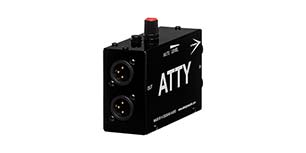
Recording Bass Without an Amp: How to Get Professional Tone Direct
Recording Bass Without an Amp: Achieving Professional Tone with Direct Input
For many engineers and bass players, the idea of recording bass without an amplifier feels counterintuitive at first. After all, the roar of a good bass rig in the room has a certain magic. Yet in professional studios, direct recording has become a go-to approach for capturing clean, powerful, and flexible bass tones that hold up beautifully in the final mix.
Direct input (DI) recording gives you control, consistency, and the ability to shape the sound after tracking. When done right—with the proper signal chain and gear—it can deliver tones that feel just as big and lively as a miked amplifier, sometimes even more so.
Why Record Bass Direct?
There are several practical and sonic reasons engineers choose to skip the amp for at least part of the signal:
- Low noise floor and isolation — No cabinet rumble, room reflections, or bleed from other instruments.
- Flexibility in mixing — A clean DI track lets you add amp simulation, EQ, compression, and saturation later without committing early.
- Speed and repeatability — Easier to get consistent takes, especially in home or smaller project studios.
- Modern production demands — Many genres favor tight, defined low end that cuts through dense arrangements.
That said, the quality of your direct signal makes all the difference. Plugging straight into a standard line input often results in thin, lifeless tone because of impedance mismatch. This is where a proper DI box, especially one with tube warmth, becomes essential.
Essential Gear for Direct Bass Recording
The foundation of a great direct bass sound starts with the right tools:
- High-impedance instrument input or quality DI box — Passive basses need at least 500kΩ–1MΩ input impedance to preserve high-end sparkle and low-end punch.
- Tube DI for character — Solid-state DIs work fine for ultra-clean applications, but tubes add harmonic richness and smoothness that many engineers prefer for bass.
- Good preamp and monitoring — Whether hardware or in your DAW, you need accurate monitoring to judge low frequencies properly.
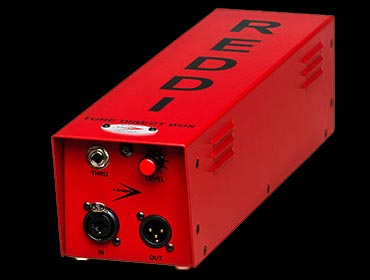
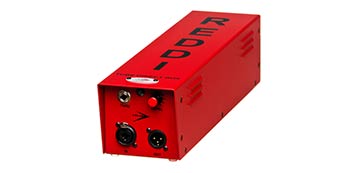
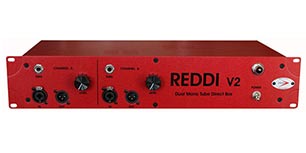
The A-Designs REDDI All-Tube Direct Box stands out here. Designed in collaboration with studio engineers and bass players, it draws inspiration from classic tube bass amps like the Ampeg B-15. Its 6N1-P tube circuit paired with a custom Cinemag output transformer delivers harmonically rich, full-range tone with exceptional clarity from 20Hz to 60kHz.
Step-by-Step: How to Record Bass Direct
Here’s a practical workflow that many engineers use:
1. Signal Chain Setup
Bass → High-quality cable → Tube DI (like REDDI) → Mic preamp or audio interface → DAW.
Use the REDDI’s thru output if you want to split to an amp for monitoring or layered recording. The front-panel level control helps you hit the sweet spot without clipping.
2. Gain Staging
Aim for healthy levels—peak around -6dB to -3dBFS in your DAW. Leave headroom. Bass has a lot of dynamic energy in the lows, and it’s easier to add gain later than fix distortion.
3. Monitoring
Use full-range studio monitors or quality headphones with a flat response. Many players add a bit of compression and EQ in the monitoring chain (not printed) to feel the instrument better while tracking.
4. Performance Considerations
Play with intention. Without the physical push of an amp, some bassists dial back their attack. Focus on consistent fingering and plucking technique.
Processing Tips for Professional Bass Tone
A raw DI track often needs some love in the mix:
- Compression: Gentle 4:1 ratio with medium attack and faster release helps control peaks while letting notes breathe.
- EQ: Gentle high-pass around 30–40Hz to clean mud. A boost around 80–120Hz for weight, and subtle presence around 2–4kHz for articulation.
- Saturation/Harmonics: Light tube or transformer saturation can add glue and warmth, mimicking the character of a good amp.
- Layering: Record a dry DI and a processed version, or blend with an amp track if possible.
Experiment with parallel processing—blend a heavily compressed/saturated version underneath the main track for power without losing dynamics.
Common Challenges and Solutions
- Thin or weak low end: Check impedance. Use a quality tube DI and ensure proper monitoring.
- Harsh high end: Tubes often smooth this naturally. Roll off extremes if needed.
- Phase issues when blending tracks: Flip polarity on one track and listen for the fullest sound.
- Lack of “feel”: Some players run a small practice amp in the room at low volume just for vibe while tracking direct.
Final Thoughts
Recording bass without an amp isn’t about cutting corners—it’s about making intentional choices that serve the song. With the right DI, careful gain staging, and thoughtful processing, you can capture bass that feels massive, articulate, and perfectly integrated into your mix.
The key is listening critically and letting the instrument and the music guide your decisions rather than chasing one “perfect” sound.