
Skip to content

A-Designs helps Shelea on her road to the White House!


We’re proud to have been a part of helping Shelea get to the White House!   On Monday, May 21st, Shelea Frazier will be joining Sheryl Crow, Michael Feinstein, Diana Krall, Lyle Lovett, Arturo Sandoval and Stevie Wonder in the PBS produced Performance at the White House, a presidential tradition since 1978.  The evening will be a celebration of the The Library of Congress Gershwin Prize for Popular Song in Performance at The White House.   This Year the prize honors the music of Hal David and Burt Bacharach.

Engineer and Producer Tony Shepperd just recently completed a recording of Shelea singing America the Beautiful through a an A-Designs front end that was presented to the President and First Lady.   Here’s the gear that helped make this stunning recording.

Microphone: Sony C800G

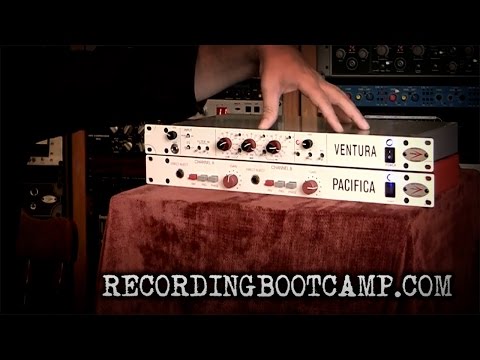
Vocal Mic Pre: A-Designs Ventura 

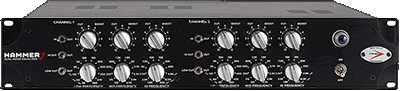
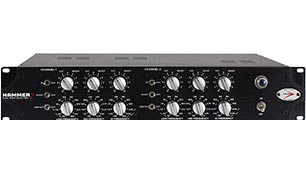
Vocal EQ: A-Designs HM2EQ Hammer

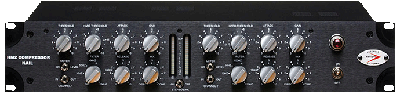
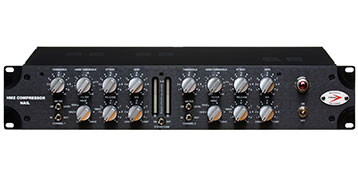
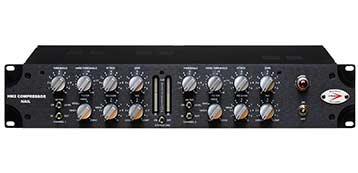
Vocal Compressor:  A-Designs HM2 Nail

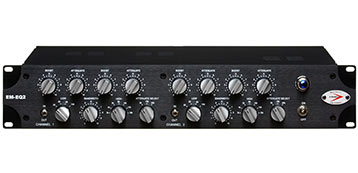
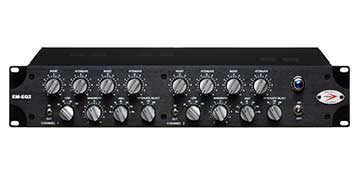
Mix 2 Buss Processing: A-Designs EM-EQ2, A-Designs HM2 Nail

Tony did a great job with this recording and it showcases our products beautifully.   We’re so proud of our friends Tony and Shelea for this great accomplishment and wish Shelea the best on Pennsylvania Avenue!

You can listen to the entire recording here:  America the Beautiful

Be sure to tune into PBS on Monday May 21st.  9pm EST.


Register your A-Designs Product Online

You may have noticed a yellow card enclosed with your new A-Designs product.  This is the Product Registration Card that we ask you to fill out and mail back to us.  We realize that in the modern age some of us just aren’t using stamps anymore.  Sorry Uncle Sam.

We now offer you a second option:  Online Registration.   This form is available on our Contacts page and in the Products Drop Down Menu, but since we have you here now feel free to fill out the form right here.

A Few Important Notes:
Please fill out this form within 10 days of purchase for warranty eligibility.   Please note that the warranty is offered to the original registered owner only and this warranty is non-transferrable.  Support is offered to everyone at any time.

Thank you for your purchase.  Now go and make some great recordings!

Dishan Abrahams Finds “Real” Bass Tone in REDDI

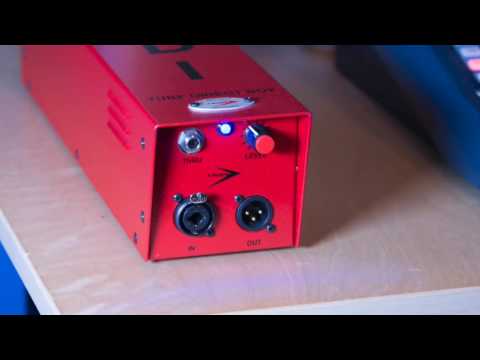
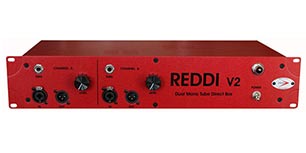
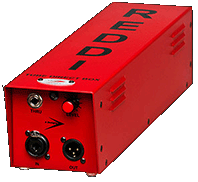
Whether he’s touring the globe or recording with multi-platinum pop stars like Australia’s Kylie Minogue, England’s Sugababes or France’s Christophe Willem, bassist Dishan Abrahams is certain to be carrying his A-Designs REDDI tube direct box along with him.

Originally hailing from Perth, Australia but now based in London, Abrahams first heard about the REDDI from Kojo Samuel, Sugababes’ musical director and keyboardist, who suggested that he check it out. “When I finally did get my hands on one, I was amazed,” the bassist recalls. “The REDDI has warmth for days and is built like a little red tank. Since I’ve started using it, I’ve had loads of great comments from front-of-house and monitors engineers, which is really the true test of a D.I.”

Abrahams was preparing to track new material with Kylie Minogue at London’s famed Abbey Road Studios late last year when he first took delivery of his REDDI. “It immediately became a vital organ of my setup–one of those indispensible pieces of gear that I don’t know how I ever did studio sessions or live gigs without because it brings such a fullness to my sound. I’ve long had an ideal bass tone in my head and the REDDI has brought me the closest to that. My sound became ‘real’ with it in the mix.”

The musician’s signal path typically begins with either a ’69 Fender P Bass or Musicman Stingray 5 feeding into a pedal board followed by an Aguilar Tone Hammer preamp before heading off to his new tube direct box. “With the REDDI, I feel like I’m getting a lot more fat, warm ‘subbyness’ from my basses, which I love. It has seriously completed the best signal chain I’ve ever had.”

Following Kylie Minogue’s hugely successful Aphrodite World Tour last year, Abrahams is currently back out on the road again with the Australian pop diva for a much more intimate series of Anti-Tour concert dates celebrating her 25 years in the music industry. Naturally, an A-Designs REDDI has gone along for the trip.

For more information on Dishan Abrahams, visit www.dishanabrahams.com.

A Designs Audio and Pete’s Place Audio at Speakeasy Sound, Burbank. Sunday 4/22/12

On Sunday April 22, 2012 A-Designs Audio and Pete’s Place Audio will be holding a very special event at Speakeasy Sound in Burbank, CA along with world renowned producer and engineer Tony Shepperd.   Tony will be tracking a live group and taking you through the steps of creating a world class recording.
This is a great opportunity to learn studio techniques from a master and to hear the best of the A-Designs and Pete’s Place equipment lines in action including:

Ventura Mic Pre/3 Band EQ, DI  NEW
EM-EQ2 Dual Pultec Style Equalizer
HM2 Nail Compressor Limiter
HM2EQ Hammer 3 Band EQ 
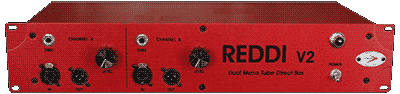
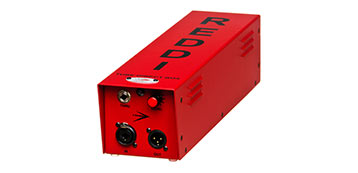
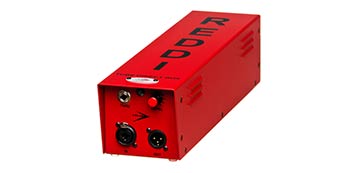
REDDI All Tube Direct Box
BAC500 and Electrodyne 500 Series Modules
EM 500 Series Mic Pres 

The event will be split into 4 sections.  

Section 1.
Drums:
Mic placement, microphones, and signal chain.
12:00pm

Section 2.
Electric Guitars/Bass:
Mic placement, DI, and signal chain.
2:00pm

Section 3.
Full group Tracking
3:30pm

Section 4.
Vocals:
Microphone selection and signal chain.
5:00pm until completed.

Due to very limited space and time, we ask that you complete this short form and we will promptly respond.  This event is “first come first served” so if you are interested please act fast. Attendees are welcome to stay for the full event, but please let us know which section or sections you are most interested in.   Thank you!

Speakeasy Sound is located at:
3404 West Burbank Blvd.
Burbank, CA 91505
Click Here for Directions


Who makes the Mic Pre with the best DI?

Who makes the Mic Pre with the best 1/4″ direct sound?

Well before I answer this question let me bend your ear a little bit.

When I first became interested in recording I picked up an old Tascam mixing board.   It had inputs and outputs galore.  At the top was a row of XLRs that read “Mic” and a row of 1/4″ inputs that read “Line.”   I understood the concept of the mic amp and had a vague and incomplete idea of what the line amp was for.   As an instrumentalist I’m primarily a bass player, but I was clueless how I could use this board for recording my bass.   Like all electric bassists and guitarists I was very familiar with a 1/4″ cable.    There was a 1/4″ input on the board just begging me to plug into it, so I gave it a shot.  I threw on a pair of headphones and monitored through the board.  What did I hear?   After cranking the line input gain knob pretty high my Fender Jazz Bass didn’t sound so jazzy anymore.  It sounded dry and boxy with not top end at all.   What the heck?  My microphones sounded pretty good through this board and the tape returns always sounded realistic so why did my bass, so heavenly through an amp, sound so crappy?

I remembered that at my live shows the sound guy always temporarily unplugged my bass and threw a little black box between my guitar and my amp.  Off of this little box, there was a long xlr cable that ran off into the distance.   Sometimes he’d flick a switch on the side of the box and the PA would start or stop buzzing.   I knew that this was a way to interface my bass to the PA system.   Now back in my home studio I thought that I needed one of those boxes.  I asked a friend that had a lot more gear than me and he loaned me a small direct box.  He explained that this box didn’t require any power and there was a transformer inside.   I was instructed to plug my bass into the 1/4″ input and run the outpur xlr into a microphone amp on my console.   There might have been a more technical description of why I needed this thing but for whatever reason it didn’t sink in.  I went back into my studio and did exactly as I was instructed.  You know what?  My bass sound got significantly better.  Still a little boxy but much improved.  I continued to use this device until I wore out my loan period and had to give it back

Now around this time I was starting to do bass session work around town.  I found myself at a studio in San Francisco’s Mission district called The Studio That Time Forgot.  It was owned by a guy named Kevin Ink that wore a little porkpie hat and dressed in thrift store highwater pants and 50′s Florida retiree style short sleeved shirts.    This studio was packed with cool old equipment that I only remember because Kevin was so passionate about it all:  A Neve broadcast board out of a South African BBC station, Lang EQs, a HUGE Ampex MM1000 2″ tape deck with a “Kelvinator” refrigerator badge glued to the side and some mysterious gear by companies with awesome names like Sphere, Electrodyne and Spectra Sonics.   He also had a workbench with an oscilloscope, soldering iron and various other instruments absolutely littered with spare parts.  This heap of equipment would influence me for years to come.

I was a few years off from starting down the audio design road, but had always worked with my hands.  My day job at the time was working for a cool cat by the name of Jeffrey Ruiz building custom furniture out of recycled wood.  We were way ahead of our time on that trip.  I had more fun than I may ever have in my life at that job, but I was also a musician that had caught the studio bug.   Now Kevin had formerly been a tech for a guy by the name of Dan Alexander.   Dan was San Francisco studio legend that went on to start Coast Recorders and made a small fortune importing old microphones and equipment from around the world in the 80′s.   I’m talking about stacks of U47s and Neve modules.   That picture of piled up mics is real!  I mean so much gear that I would would not be surprised if an ELAM 251 had been used as a doorstop.    Dan himself was not a tech so he started hiring young guys to repair equipment and help him assemble his line of racked vintage modules. A few years later I was racking solid state Telefunken modules myself and selling them like hotcakes to friends and on a new online auction site that you may have heard of.   A story for another time.

Kevin had worked for years as one of these indentured techs and had accumulated a fair amount of equipment.    Back in the Mission Kevin plugged me into one of these units.   It was a Telefunken V72 on one of Dan’s branded faceplates with a 1/4″ jack on the front.   There we’re wires dangling from the back but this thing looked super cool.  It had a big silver lever on the front that I just wanted to pull.    I was tracking in the control room right in front of the speakers and this is where I got to hear some serious electric bass sound.   I had made a slight improvement with my passive direct box at my home studio but this old tube unit was incredible.  Full frequency and not boxy at all.

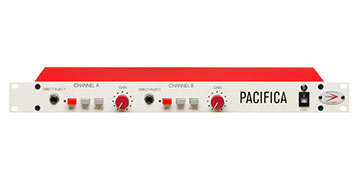
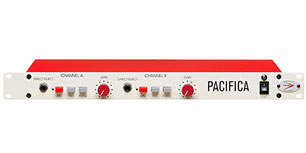
It was at this point that I started to educate myself and here are some things I learned.   Each piece of equipment has a different input and output impedance.  Here’s a good primer since this post is long enough as it is.   In modern studio interfacing based on impedance bridging as opposed to the power transfer ideal of ye olde phone company, we are looking to send a low impedance source into a higher impedance load.  Something in the order of 10x magnitude is a good place to start.   EG.   A microphone (source) has an output impedance of 150 ohms.   The mic input impedance of a Pacifica (load) is 1500 ohms.  1500/150=10.  We’re looking good here.

Now with passive guitar pickups(also a source) there is a much higher impedance due to the  windings.   5000-10000 ohms is not uncommon.   Now going off of the 10x formula the pickup wants to see a load of at least 100,000 ohms but in reality engineers have found that this ratio should be in the order of 100x or more when dealing with passive pickups.   The line input on my Tascam was 10,000 ohms or 10k.  I was running a 5k pickup into a 10k load and losing a ton of high frequency because of this.  The first passive direct box I had probably had an input impedance if about 50k which improved things and the V72 was 500k ohms which improved things even more.

Now you knew I was going to come around to the question of who makes the best DI on a mic pre?  Well we do, of course!

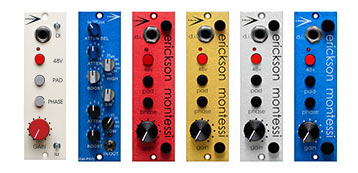
Many mic pres on the market have a 1/4″ input on the front that is only suitable for low impedance sources such as synths, drum machines or active pickups.  When we designed the Pacifica and all of our 500 series mic pre modules we wanted a direct circuit that could hold its own against the best dedicated direct boxes including our own REDDI (which frankly is the best standalone DI for electric bass in the world).  We’re bass players at A-Designs and if it can’t make a P or Jazz sound good then to hell with it.  We added an elegant, discrete circuit that presents a 2 million ohm load to your pickups and runs the signal through the input transformer which adds a touch of musical harmonic distortion.  Thats good distortion.  This full frequency sound via impedance bridging along with subtle distortion is what I liked in that old V72 and what I love in the REDDI and on our mic pres.  The direct sound is so good that you might just find yourself leaving your amp out of the mix.

As Fletcher would say ‘your mileage may vary’ but with A-Designs you’re hitting the highway with a full tank of high octane.

Gerald Veasley and A-Designs are REDDI!

Gerald Veasley, Jimmy Bruno & John Blake w/ special guest Damian Erskine

I just got back from a great trip to the east coast.   A-Designs was one of the sponsors of Gerald Veasley’s Bass Bootcamp I have never heard so many well played low notes in my life!  Gerald is a wonderful guy and a great leader in the bass community and we we’re proud to support his great event.  Thanks for all your hard work Gerald.  See you next year I hope!  PM

VIDEO: How to use the EM-EQ2 Pultec Style Equalizer

Check out Ronan Chris Murphy’s awesome Ronan’s Recording Show where he demonstrates how to use the A-Designs EM-EQ2.  Ronan is a great educator and goes over a bit of history of Pultec style equalizers and gives a great primer on how to use this very unique eq.